Solution Overview: Anywhere On-Us Fraud

Multi-layer Check Fraud Technology
A multi-layered check fraud technology approach is a strategic framework that leverages complementary technologies to create a more robust system. Anywhere Fraud emphasizes the integration of distinct components, each serving a specialized function while working cohesively within a larger ecosystem. By utilizing multiple layers, organizations minimize false positive rates (targeting under 0.5%) with low manual review overhead, while attaining 95%+ detection rates.
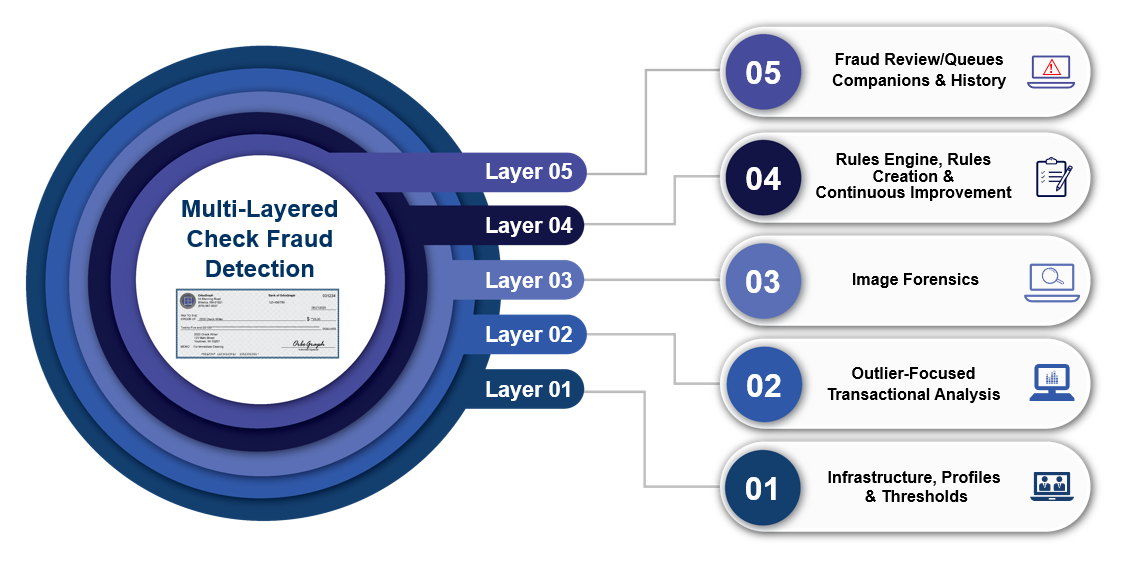
Layer 1: Infrastructure, Profiles, and Thresholds

Layer 2: Outlier-Focused Transaction Analysis (Highly Targeted Data Analytics)
Among the tools utilized are velocity analysis, which tracks the frequency of checks processed within a specific time frame, and out-of-range checks, including Serial Out of Range (SOOR) and Amount Out of Range (AOOR) analysis. These methods are pivotal for fraud analysis to flag unusual patterns that deviate from standard transaction behaviors, thus enabling institutions to spot potential fraudulent checks before they are honored.
Adding an additional layer of sophistication, these analyzers when combined with account-level profiling, enhance fraud detection capabilities. Another component of transactional analysis involves account status. If the account has a certain status, i.e. dormant, high risk, new, etc. the system can be setup to identify risks around each account type.

Lastly, the system considers businesses and consumers who have multiple check writers. A simple example would be a couple with both spouses writing checks. However, many large businesses issue checks from multiple offices, hence generating multiples of check serial numbers concurrently. Anywhere On-Us Fraud will dealing with these variations. For a full list of image and transaction analyzers, click the link below.
Layer 3: Image Forensics
Image forensics refers to the scientific analysis and examination of digital images of checks to identify signs of tampering, forgery, or manipulation. It involves using specialized techniques and tools to assess the authenticity and integrity of check images, ensuring they have not been altered to facilitate fraudulent activities.
Image forensics represents a significant evolution in image analysis technology, ushering in a new era where traditional methods like optical character recognition (OCR) and handwriting analysis algorithms are superseded by sophisticated artificial intelligence and deep learning models. This transition marks a fundamental shift in how image data is processed and analyzed, enabling greater accuracy and efficiency in detecting fraudulent activities. The current landscape requires more than basic analysis developed twenty years ago; it demands an adaptable approach, capable of learning from vast datasets to identify subtle changes and anomalies that may indicate fraud.
Suspect Item (Slide Right)


Companion Item
Check Stock Validation (CSV-AI)
Automated Signature Verification (ASV-AI)
For additional insights into this innovative technology, interested readers can refer to the Forensic Document Examination interview, which offers a closer look at the implications and benefits of such advanced systems in safeguarding financial transactions.
Writer Verification (WV-AI)
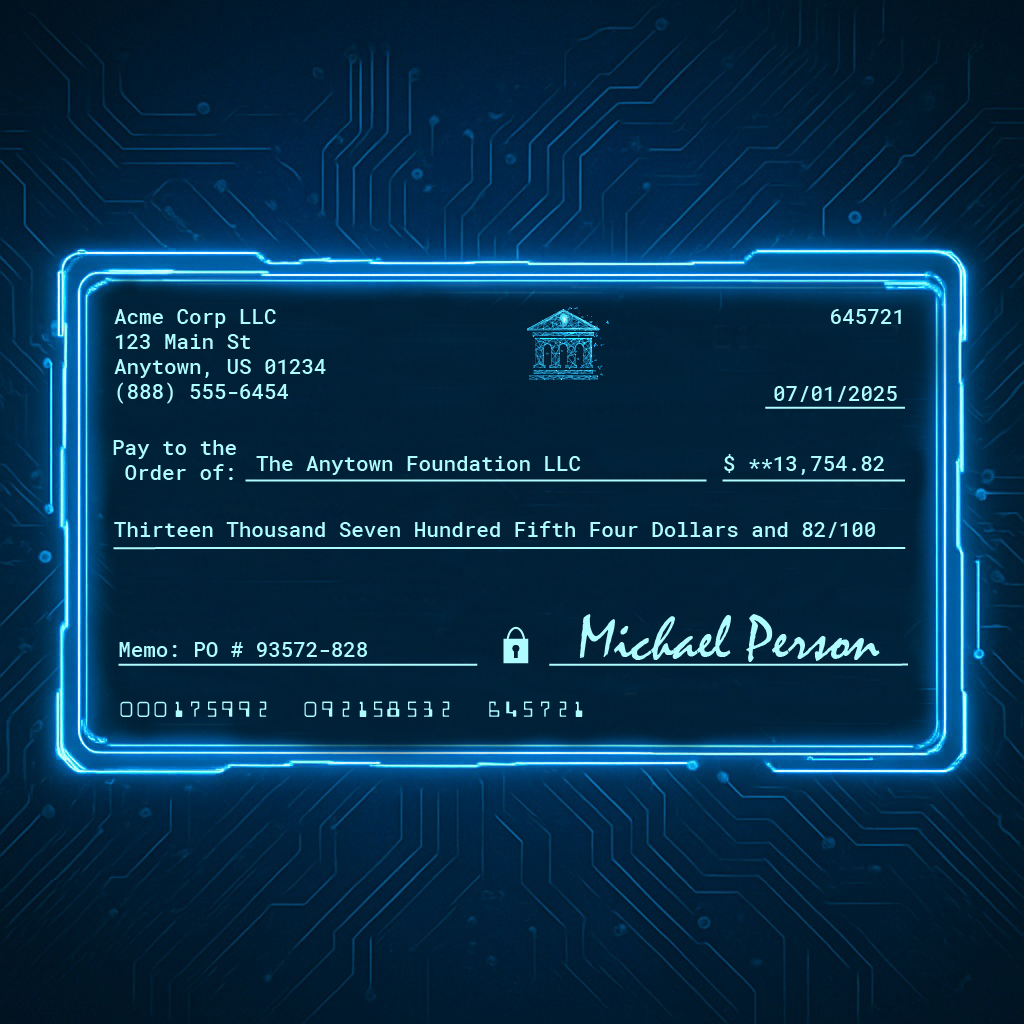
Writer Verification employs a comprehensive methodology to scrutinize various attributes of checks, including the Check Amount Recognition (CAR), Legal Amount Recognition (LAR), date, payee information, and comparisons to previously cleared items. By analyzing both printed text and handwritten elements, experts can identify subtle discrepancies that may indicate tampering. For instance, changes in the orientation, spacing, or slant of handwriting can reveal signs of alteration, while variations in printed fonts may also signify fraudulent intent. As financial institutions adopt these advanced verification techniques, they are better equipped to combat the growing threat of check fraud.
Alteration Detection
Alteration detection is a critical process in financial and data analysis, particularly when it comes to ensuring the integrity of financial reports and transactions. Two essential methods for identifying alterations are Check Style Analysis and the examination of courtesy and legal amount fields to identify discrepancies. These techniques are instrumental in uncovering discrepancies that may indicate manipulation or fraudulent activities. By scrutinizing these amount fields, analysts can effectively capture variations that may otherwise go unnoticed.
Layer 4: Rules Engine, Rules Creation, and Continuous Improvement
A fraud rules engine serves as a critical component in the arsenal of financial institutions striving to combat fraudulent activities. This specialized decision-making software utilizes a series of logic-based rules designed to identify potentially suspicious transactions or behaviors according to predefined parameters. By integrating advanced data analytics, financial institutions can analyze transaction patterns, enabling them to detect anomalies and establish new rules to address emerging fraud trends. This proactive approach is essential, as fraud schemes continuously evolve, necessitating a dynamic response from FIs to safeguard their operations and customers.
To enhance their fraud detection capabilities, Anywhere On-Us Fraud offers an embedded rules engine capable of managing a broader spectrum of fraud use cases. This sophisticated tool provides financial institutions with the flexibility to adjust the scoring of analyzers through the OA Rules Generator, a machine learning application developed by OrboGraph Client Services. By evaluating previously processed items, this application assists in formulating optimized business rules aimed at refining fraud detection mechanisms and minimizing false positives.
Capabilities involving a rules engine and rules creation help feed an OrboGraph process we call Continuous Improvement Process or CIP. By monitoring performance on an ongoing basis, we can fine tune rules and thresholds to continuously improve field production over time.

Layer 5: Fraud Review/Queues Companions & History
Technology plays a crucial role in identifying suspicious activities, but still requires highly skilled and well trained fraud experts to review "low score" items. Fraud analysts bring a depth of insight and experience. Equipped with the right tools and access to comprehensive data, these professionals are instrumental in deciphering complex fraud patterns and making informed decisions on potential threats.

Solution Deployment and Benefits
-
Increased detection of counterfeits, forgeries, and alterations
-
Reduction in false positives
-
Self-learning profiles provides continuous improvement
-
Flexible system deployment with existing fraud review platforms
-
Continous enhancements through product releases
Case Study
Top 15 Bank
Case Study
Profile: Top 10 Us Bank by Asset Size
Volume: 300,000+ items per day
Fraud $'s Caught (2024): $80,000,000+
Case Study
Regional Bank
Case Study
Profile: Regional Bank with over $35B in assets
Volume: 90,000+ items per day
Fraud $'s Caught (2024): $11,000,000+
Case Study
Community Bank
Case Study
Profile: Regional/Community
Volume: 40,000+ items per day
Fraud $'s Caught (2024): $6,000,000+
Detection Rate: 100%